

Dear Jeanie,
I want to talk to you about something that has nothing to do with a spreadsheet or a savings account, but everything to do with the way you choose to live your life. And the best teachers I can point you toward are not financial advisors or business gurus. They are the people living quietly and contentedly in the apartments, neighborhoods, and cities of Europe.
Europeans have something figured out that most Americans are still struggling to find. They know how to live well on less. Not because they have given up on anything, but because they have made a conscious choice about what actually matters and what is simply noise. That distinction, once you truly internalize it, changes everything.
They live in smaller spaces, and in many cases they do not have a choice in the matter. Housing in most European cities is historically dense, genuinely limited, and expensive relative to local salaries. A modest apartment in London, Paris, Madrid, or Rome is not a consolation prize. It is simply the reality of life in one of the greatest cities in the world, and over generations Europeans have learned not just to accept that reality but to make the most of it. When you are working with limited square footage, every purchase becomes a decision. Every item you bring through the door has to earn its place. There is no spare room to fill with things you do not need and no oversized closet to hide impulse purchases. That constraint turns out to be one of the most powerful financial habits imaginable. They buy what serves a purpose and they take care of it. New York City operates on exactly the same principle, and it is one of the things I have always admired about city living done well. Small space forces clarity. Clarity forces intention. And intention, over a lifetime, builds a life that feels full without ever feeling cluttered.
They rely on public transportation and do not treat a car as a status symbol. If they own one at all, it is modest, practical, and maintained. It gets them from one place to another and that is the entire point. They are not making a statement with what they drive. They are simply getting where they need to go.
They take food seriously in a way that most Americans have completely forgotten. Europeans cook from scratch. They shop at local markets, they read labels, they know what they are putting into their bodies, and they take genuine pride in preparing a real meal at home. Eating out is a special occasion, not a daily default. And the result is not just financial savings, though those are significant. The result is better health, stronger family rituals, and a relationship with food that is rooted in pleasure and nourishment rather than convenience and habit.
Their wardrobes are small and intentional. Because closet space is limited, the question is never how much can I own but rather what do I actually need. A carefully chosen collection of quality pieces that work for both home and professional life beats a closet stuffed with things you never wear and cannot remember buying. Less is genuinely more when every item you own has a purpose.
They work to live rather than live to work, and that is perhaps the most important lesson of all. Europeans take their vacations seriously and without guilt. They disconnect from work completely when they are off the clock. They protect their personal time, their family time, and their leisure time as fiercely as they protect anything else in their lives. They understand intuitively that a life spent entirely in service of a career is not a full life. Work is how you fund the life you want. It is not the life itself.
They love art, culture, and history in a way that costs very little but enriches everything. The best museums in the world are in European cities, and many of them are free or nearly free to visit. They travel, they are curious, they understand context, and they approach the world with a perspective that comes from genuinely knowing something about it. That kind of richness cannot be bought. It has to be lived.
They value family and community in a deep and practical way. Not just as a sentiment but as a genuine support system. They look after each other. They show up for each other. They understand that the people around you are the most valuable resource you will ever have, and they invest in those relationships consistently and without keeping score.
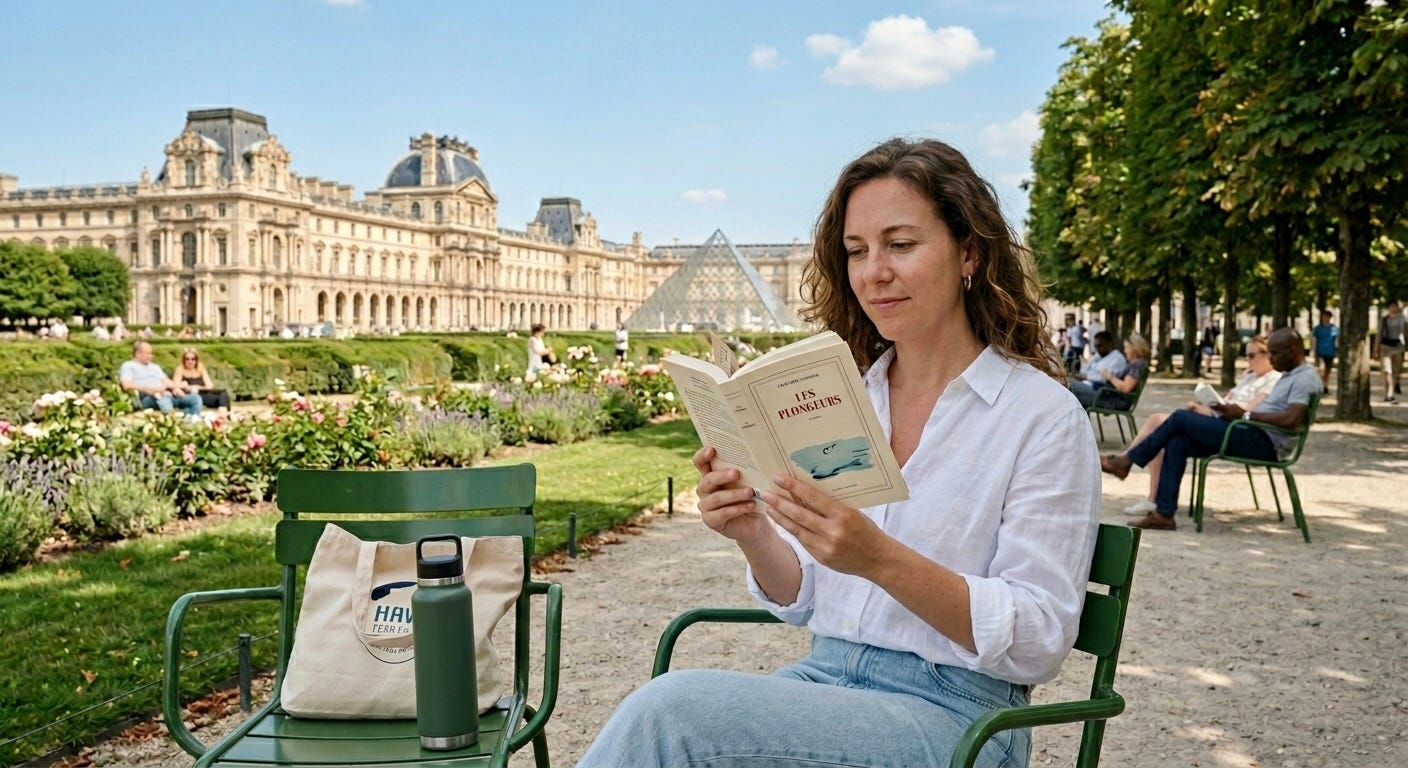
They know how to find genuine joy in the simple things that life offers every single day, and a big part of that comes from necessity. Salaries in most European countries are considerably lower than what Americans are used to, and that economic reality has shaped an entire culture around finding richness in experiences and relationships rather than in spending. When money is tight, you learn very quickly what actually makes you happy, and it almost never turns out to be the things you can buy. A long lunch with a close friend. A walk through a beautiful neighborhood on a Sunday morning. A home cooked meal shared around a table with people they love. A quiet evening with a good book or a glass of wine. These things cost very little and yet they form the foundation of a life that feels genuinely full and satisfying. They do not need a special occasion to enjoy their lives, and they do not need to spend a significant amount of money to feel like they are living well. They have mastered something that consumer culture works very hard to make people forget, which is that the most satisfying moments in life are almost never the most expensive ones. And while Europeans are not necessarily known for having large savings accounts, they are known for something arguably more valuable. They are not slaves to consumption. They do not spend money they do not have trying to impress people they do not know. They live within their means, they enjoy what they have, and they do not lie awake at night feeling empty because they did not buy something. That quiet contentment, born originally out of financial necessity, is perhaps the most important life lesson the rest of the world has yet to learn from them.
And perhaps most importantly, they understand that money is a tool, not a master. They are clear eyed about the ways that corporations and politicians work to separate ordinary people from their earnings, and they push back. They organize. They strike. They demand better. They know their rights and they exercise them without embarrassment or apology.
Jeanie, you do not have to move to Europe to live like this. You just have to choose it. Choose the smaller apartment over the impressive one. Choose the home cooked meal over the expensive restaurant. Choose the reliable car over the flashy one. Choose the museum over the mall. Choose the vacation over the overtime. Choose the people in your life over the things in your life. And choose the quiet, simple pleasures that are available to you every single day over the expensive distractions that leave you feeling empty the moment the novelty wears off.
That is the European way. And there is no question that when it comes to enjoying life more with less, they have something genuinely worth learning from.
Love, Dad.