
Dear Jeanie,
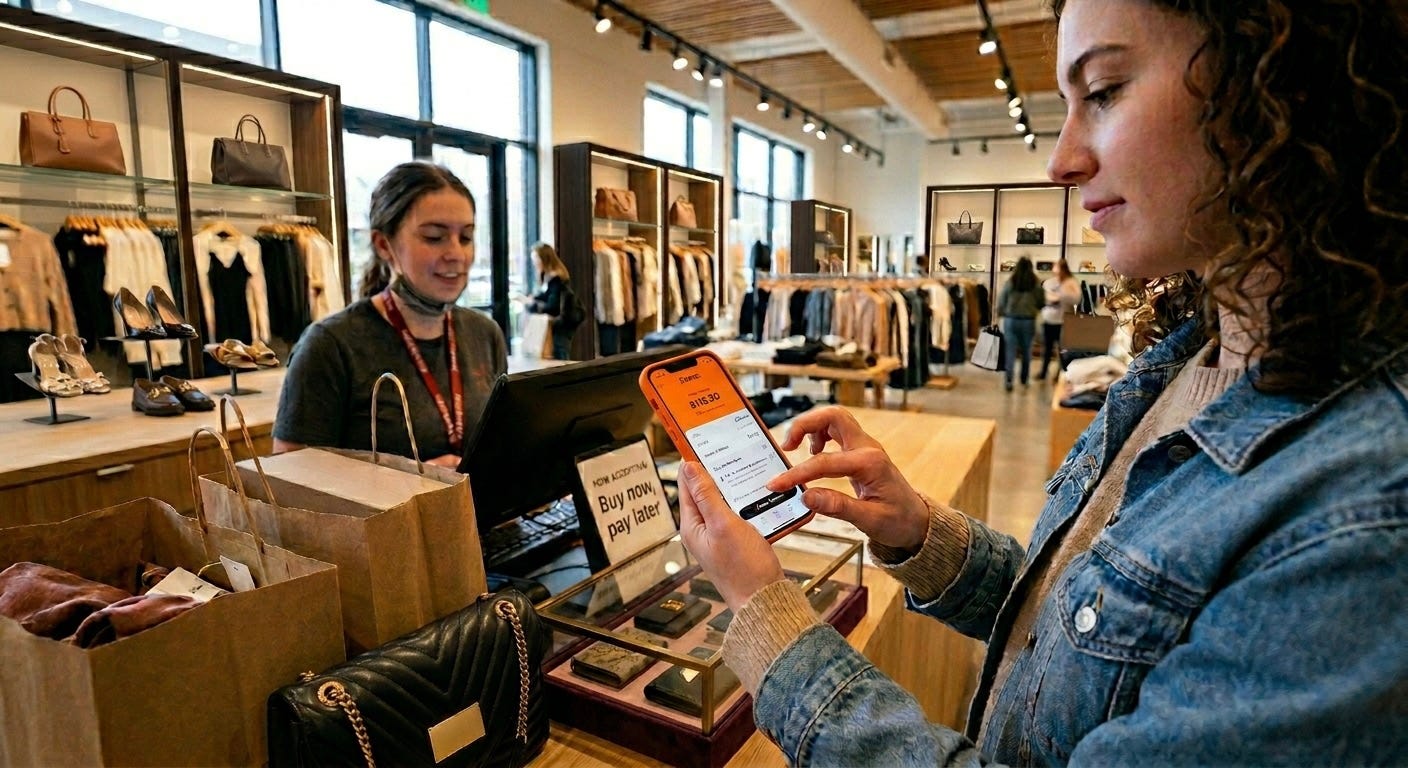
I want to talk to you about something that has quietly become possibly one of the most effective financial traps for people your age. You have definitely seen it already. Buy Now, Pay Later. That little option at checkout that lets you split a purchase into smaller payments over a few weeks. It is everywhere now and it feels completely harmless. Smart even. Like you are being clever with your money instead of just handing it all over at once.
I want to explain exactly why this concerns me. Not because I think you are not smart enough to handle it. But because it is specifically designed to feel harmless to smart people. And I have watched enough people get quietly hurt by it to want to make sure you understand what is really going on before you use it.
The Core Trick
Here is the single psychological shift that makes Buy Now, Pay Later so effective. And once you see it you will recognize it every single time.
When you are about to buy something your brain naturally asks a sensible question. Can I actually afford this? That question keeps you honest. It connects the purchase to your real financial situation.
Buy Now, Pay Later quietly replaces that question with a different one. Can I afford $30 every two weeks? And the answer to that is almost always yes. Even when the honest answer to the first question is absolutely not.
That is the entire business model. The moment you start thinking about payments instead of total cost you will buy things you never would have bought if you had to pay for them all at once. And you will buy more of them. More often. More easily.
There is a reason why every major retailer has eagerly signed up to offer this at checkout. It is not because they want to do you a favor. It is because Buy Now, Pay Later companies have built their entire business around a very specific and very deliberate bet. They are betting that more people will buy because the barrier to saying yes is so much lower. They are betting that people will buy more expensive items because the full price no longer registers the same way. They are betting that people will buy more often because each individual purchase feels so small and manageable. And they are betting that merchants will pay handsomely for exactly that increase in sales volume. That merchant fee is actually where most of the profit comes from for these platforms. Not from you directly. From the retailer who is paying them because you spent more than you otherwise would have.
So when you see that little button at checkout, understand what is actually happening. The retailer is paying a company to make you spend more. The payment option is a sales tool designed to benefit the retailer and the platform. Not you.
So before you use it, always stop and ask yourself the honest question. Not can I afford the payment. Can I actually afford the purchase. Those are genuinely not the same question and the difference between them can cost you a great deal.
How Payments Stack Up Faster Than You Think
One plan on its own feels manageable. But here is what happens in real life. You buy shoes and now you have $25 going out every two weeks. You pick up some clothing and add another $30. An electronic purchase adds $40. Some vacation gear adds $50. Before you have fully noticed you are committed to $145 leaving your account every two weeks for purchases you made weeks or months ago. That is nearly $300 every single month. Gone before rent, before groceries, before savings, before anything that actually matters.
And here is what makes it even harder to manage than a regular credit card. With a credit card you have one statement, one balance, one place to see exactly where you stand. With Buy Now, Pay Later your payments are scattered across multiple separate platforms with different billing dates and different automatic withdrawals hitting your account on different days. According to the Consumer Financial Protection Bureau more than 60% of Buy Now, Pay Later borrowers are carrying multiple loans simultaneously and about a third are borrowing from more than one platform at the same time. Most of them have no clear picture of their total commitment because there is no single place that shows it all at once.
What happens practically is that you forget something is coming out. A few automatic withdrawals hit across different days, a regular bill lands on top of that, and suddenly your account is short and you are dealing with overdraft fees on top of everything else. The Consumer Financial Protection Bureau specifically warns that these automatic withdrawals can trigger overdraft fees when the timing catches you off guard. It is not a dramatic financial collapse. It is just a slow, persistent, expensive drain that quietly keeps you from getting ahead.
Every Payment Is a Promise Against Your Future
Every time you use Buy Now, Pay Later you are not just buying something today. You are committing a piece of your future income before it has even arrived. Future you is already obligated before the paycheck lands.
After enough of these purchases your paycheck arrives and it is already mostly spoken for. The rent, the regular bills, and on top of all that a collection of automatic withdrawals going out before you have made a single intentional decision about your money. Nothing left to save. Nothing left to invest. Nothing available when something unexpected comes up.
This is genuinely how people who earn decent salaries in their twenties and thirties still feel financially stuck. It is not always that they do not earn enough. It is often that too much of what they earn is already gone before they ever really had it.
What Happens When You Lose Your Job
This is the scenario most people never think about when everything is going well. And it is the one that can genuinely hurt you the most.
As I have told you in other letters, there is a real possibility that at some point in your career you will be laid off. Companies restructure. Budgets get cut. It happens to talented, hardworking people who did everything right. And when it does, the thing that determines whether you land on your feet or spiral into real financial trouble is not your resume or your network. It is how much of your monthly income was already committed before it happened.
If you lose your job while carrying several hundred dollars a month in Buy Now, Pay Later payments, your income stops. But those automatic withdrawals do not. They do not know you lost your job. They do not care. Every two weeks they reach into your bank account and take what they are owed regardless of whether any money is coming in. And unlike a credit card where you can sometimes call and negotiate a temporary arrangement, Buy Now, Pay Later platforms are largely automated. There is no relationship. There is no flexibility. There is just the automatic withdrawal and whatever consequences follow if the money is not there.
So now you are dealing with no income, automatic withdrawals draining your savings, potential overdraft fees when those withdrawals hit a low balance, possible late fees, and potential credit consequences if something goes unpaid. All while you are trying to find a new job that might take weeks or months to secure.
The emergency fund I keep talking about in other letters is designed specifically to protect you in exactly this situation. But its effectiveness depends entirely on how much of it gets eaten up by payments running automatically in the background. Every dollar committed to Buy Now, Pay Later payments during a period of unemployment is a dollar that should have been protecting you. Every automatic withdrawal that goes out is money that should have been covering your rent, your health insurance, and your daily life while you get back on your feet.
This is why I feel strongly about it. It is not about any individual purchase. It is about how exposed you are when everything goes wrong at the same time. And the more of your future income you have committed to automatic payments before that happens, the more vulnerable you are when it does.
The Lifestyle Inflation Trap
This is the most quietly damaging consequence of Buy Now, Pay Later and honestly the one I worry about most for people your age.
Lifestyle inflation is what happens when your spending gradually rises to match or exceed your income, not because of any single big decision but through a hundred small ones that each feel completely reasonable at the time. Buy Now, Pay Later accelerates this process in a way that is almost invisible until it is already deeply embedded in your daily life.
Here is how it happens. You start your first real job. Everything feels new and exciting. You want your apartment to look nice, your wardrobe to feel right, your weekends to match the energy of being young and living in a great city. All completely understandable. But Buy Now, Pay Later makes it easy to acquire all of those things immediately, right now, without waiting, without saving, without making any real financial trade-off that forces you to choose. You can have the nice apartment, the wardrobe, the weekend plans, the tech, the home decor, all of it, because none of it feels expensive when you are only thinking about the payment.
So your lifestyle quietly expands to a level your income does not actually support. Not dramatically or recklessly. Just gradually. A little nicer than you can afford here. A little more than necessary there. And the cumulative effect is a monthly financial commitment that leaves nothing for building a future.
The really insidious part is that once you have established a certain lifestyle it becomes your new normal. The apartment, the wardrobe, the habits all feel like the baseline now. Scaling back feels like going backward rather than simply living within your means. So instead of cutting back you keep the payments running and tell yourself you will start saving more when you earn a little more. But when you earn more the lifestyle expands again. And the gap between what you earn and what you actually keep never closes.
I have watched this happen to people with genuinely good salaries who should have been building real financial security. They found themselves at thirty with almost nothing saved, a lifestyle they could not easily reduce, and a persistent sense that no matter how much they earned it was never quite enough. Buy Now, Pay Later did not cause all of that on its own. But it made the gradual expansion of their lifestyle completely frictionless in a way that would never have been possible if every purchase had required them to actually have the money first.
The discipline of waiting until you can genuinely afford something before buying it is not just about money. It is about keeping your lifestyle anchored to your actual financial reality rather than to the most optimistic version of your future income. It forces real choices and real trade-offs. And those choices are what keep your spending from quietly outrunning your savings year after year.
Missing a Payment Has Real Consequences
Most people think of Buy Now, Pay Later as risk free because the amounts are so small. But missing a payment can create real problems that catch people off guard.
Depending on the platform and the situation, late payments can result in late fees, restrictions on your ability to use the service in the future, and in some cases impacts on your credit history if the account goes to collections. And because the amounts are small and the platforms easy to forget about, missing one is more common than you would think. Your bank account details change, a card expires, your balance runs low on a particular day, and suddenly something you barely remembered signing up for has become a real problem.
The Invisible Cost Nobody Talks About
Every dollar going toward Buy Now, Pay Later payments is a dollar that is not growing on your behalf. That is the cost that nobody talks about because it is invisible in the moment.
A modest amount in monthly payments does not feel significant right now. But that same amount invested consistently over years at a reasonable long-term return could grow into something genuinely meaningful. The things you financed will be long forgotten. The wealth you could have been building instead will not be there.
This is what tends to hit people in their thirties when they take honest stock of where they are. They have been earning decent money for years. But they have less saved than they expected because the gap between what they earned and what they actually kept was quietly filled by hundreds of small convenient decisions that each seemed perfectly reasonable at the time.
The One Question That Always Protects You
Before you use Buy Now, Pay Later, ask yourself one honest question. Would I still buy this if I had to pay the full amount right now in cash?
If the answer is genuinely yes and you can comfortably afford the total cost then using it occasionally with full awareness is not the end of the world. People use credit responsibly all the time when they are completely clear-eyed about what it costs.
But if the honest answer is no, then the payment plan is not helping you afford something. It is helping you feel like you can afford something that you actually cannot. That distinction matters far more than it might seem in the moment.
Build your savings. Keep your emergency fund healthy and untouched. Because when you have a real financial cushion you are never in a position where splitting a purchase into payments feels like the only way to make it work. And when something unexpected happens, a job loss, a medical bill, a car repair, your savings are actually there to protect you rather than being quietly drained by payments for things you bought months ago.
Keep your lifestyle anchored to what you actually earn today, not what you hope to earn tomorrow. Because the gap between those two numbers is exactly where financial security either gets built or quietly disappears.
Think in full prices. Save before you spend. And be very careful about anything that makes skipping those two steps feel like the smart move.
Love, Dad.